
 Local SEO Strategy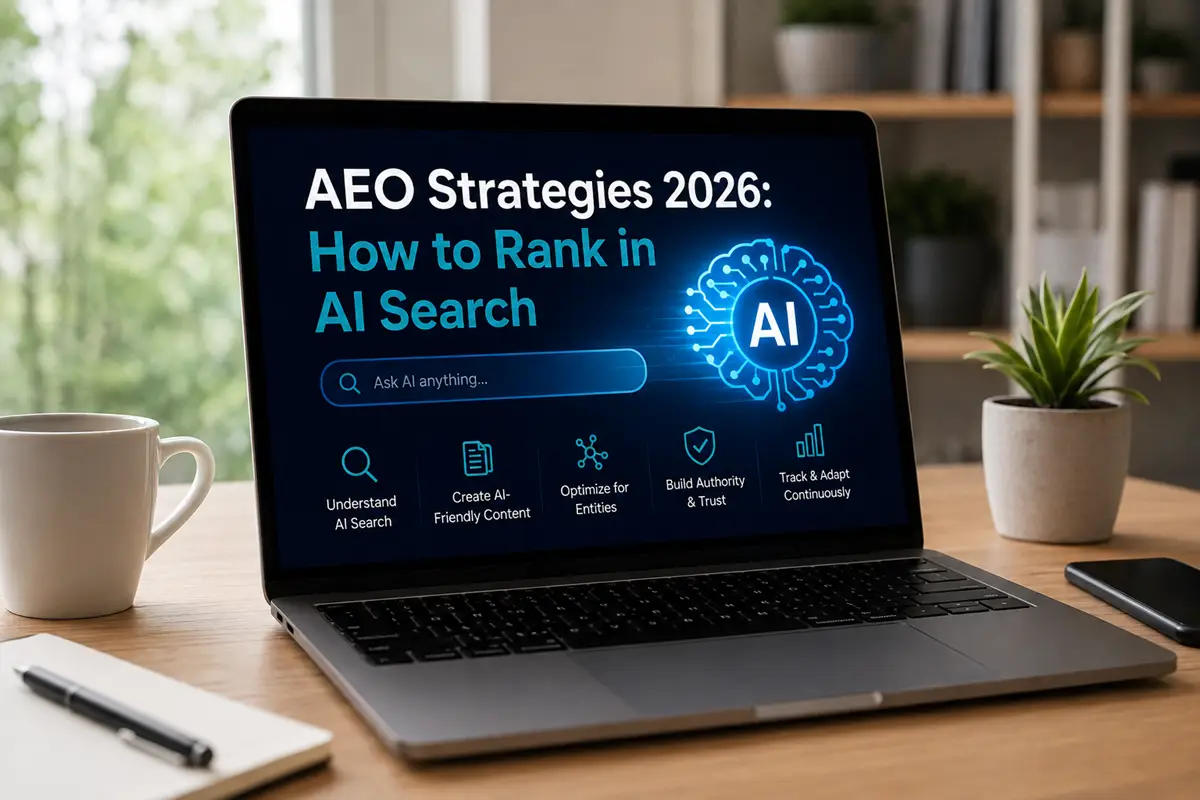
Introduction
Search is no longer just about typing a few words into Google and clicking the first blue link.
Today, people ask full questions in tools like ChatGPT, Google AI Overviews, Perplexity, and Gemini. They want quick, clear answers. They may ask for the best local service, compare products, research a health topic, or look for help with a problem.
For businesses, this means one important thing: your website needs to do more than rank in normal search results. It also needs to provide information that AI tools can understand, trust, and use when answering questions.
This is where Answer Engine Optimization, or AEO, comes in.
AEO helps you create content that answers questions clearly. It supports your normal SEO work while improving your chances of being mentioned, linked, or cited in AI-powered search results.
This guide explains how AEO works, why it matters in 2026, and what practical steps you can take to make your website more visible in AI search.
What Is Answer Engine Optimization?
Answer Engine Optimization is the process of making website content easier for search engines and AI tools to understand.
The main goal is simple: when someone asks a question, your website should have a clear, useful answer.
For example, a person may ask:
What is Answer Engine Optimization?
A strong webpage might begin with this answer:
Answer Engine Optimization is the process of improving website content so search engines and AI tools can understand it, summarize it, and use it to answer user questions.
After giving the short answer, the page can explain the topic in more detail.
AEO is not about trying to trick AI tools. It is about making your website genuinely helpful. When your content is clear, accurate, well-organized, and easy to trust, it has a better chance of being found by people using AI search.
Why AEO Matters in 2026
People are changing the way they search.
Instead of typing short phrases such as “SEO services,” they now ask questions like:
- What are the best SEO services for small businesses?
- How do I get my business found in ChatGPT?
- What is the difference between SEO and AEO?
- How can I rank in Google AI Overviews?
- What is the best local SEO strategy for a service business?
These questions show strong intent. The person is not just browsing. They are trying to understand, compare, or make a decision.
That creates a valuable opportunity for businesses that provide clear answers.
AEO is important because AI search tools often summarize information before users visit a website. If your business is mentioned as a useful source, it can build awareness, trust, and qualified traffic.
However, AEO does not replace regular SEO. Your website still needs to be easy for search engines to crawl, index, and understand. Strong page speed, mobile usability, internal linking, quality content, and technical SEO are still important. A professional SEO audit can help identify the technical and content issues that affect visibility.
Think of SEO as the foundation of your house. AEO is the extra work that makes the house easier to find, understand, and trust.
AEO vs SEO vs GEO
You may hear people use the terms SEO, AEO, and GEO. They are connected, but each one has a different focus.
SEO
SEO means Search Engine Optimization.
It focuses on helping a website appear in regular search results. SEO includes keyword research, page titles, technical fixes, internal links, useful content, backlinks, local listings, and mobile performance.
If someone searches “SEO agency near me,” SEO helps your website appear in the results.
AEO
AEO means Answer Engine Optimization.
It focuses on creating clear answers for people using AI tools, voice assistants, featured snippets, and answer-focused search results.
If someone asks “What does an SEO agency do?” AEO helps your website provide a direct, easy-to-understand answer.
GEO
GEO means Generative Engine Optimization.
It is closely connected to AEO. GEO focuses more on appearing in answers created by generative AI tools that collect and summarize information from many sources.
The main difference
| Strategy | Main purpose | Example |
|---|---|---|
| SEO | Help webpages rank in search results | Ranking for “local SEO services” |
| AEO | Help content answer questions clearly | Answering “What is local SEO?” |
| GEO | Help brands appear in AI-generated answers | Being mentioned in an AI response about local SEO |
The best approach is not choosing only one. Strong SEO, AEO, and GEO work together.
10 AEO Strategies for 2026
1. Answer Questions Quickly
The first rule of AEO is simple: answer the question early.
People do not want to read five long paragraphs before they get the information they came for. AI tools also need to find the main answer quickly.
For example:
Question: What is AEO?
Clear answer: AEO is a way of improving website content so AI tools and search engines can find, understand, and use it when answering user questions.
After that, you can explain why AEO matters, how it works, and what steps businesses should take.
Starting with a direct answer makes your content more useful. It also helps search systems understand the main point of the page.
2. Use Long-Tail Question Keywords
Long-tail keywords are longer and more specific search phrases.
They are often very useful for AEO because AI users usually ask full questions instead of using short keywords.
Instead of using only:
SEO services
Use natural questions such as:
- What are the best SEO services for small businesses?
- How does Answer Engine Optimization work?
- How do I rank in AI search?
- How do I get cited by ChatGPT?
- How can I appear in Google AI Overviews?
- What is the difference between AEO and SEO?
- How do I optimize a website for Perplexity?
These phrases tell you exactly what a person wants to know.
You can use them in headings, FAQs, page titles, and natural sentences. The key is to write for people first. Do not force the same phrase into every paragraph.
3. Keep Your Content Well Organized
A well-organized page is easier for people to read and easier for AI tools to understand.
Use a clear structure:
- One main title
- Helpful headings
- Short paragraphs
- Bullet points
- Numbered steps
- Tables for comparisons
- Examples
- Frequently asked questions
For example, instead of writing a heading like “Important Information,” write:
How to Optimize Content for AI Search
That heading clearly tells the reader what the section covers.
Good organization also helps visitors stay on your website longer because they can quickly find the information they need.
4. Build Real Topic Knowledge
If you want your website to be trusted for a subject, you need to cover that subject properly.
Writing one short page about AEO is not enough to show deep knowledge. A stronger website creates a group of helpful pages around the same subject.
For example, an SEO agency could create content about:
- What is Answer Engine Optimization?
- AEO vs SEO vs GEO
- How to rank in AI search
- ChatGPT search optimization
- Google AI Overview optimization
- Perplexity SEO optimization
- AI search keyword research
- How to track AI search visibility
These pages should link to one another naturally.
This is called building topical authority. It helps people see that you understand the topic, and it helps search systems understand what your website is known for. Businesses can also explore the role of autonomous AI agents as AI continues to change how digital information is discovered and used.
5. Make It Clear Who You Are
People trust information more when they know where it came from.
Your website should clearly show:
- Your company name
- What you do
- Who you help
- Where you are located
- How people can contact you
- Who wrote your articles
- Your experience or credentials
- Your team members, if relevant
A good About page, Contact page, author bio, and service page all help build trust.
For example, if you run an SEO agency, explain your experience with SEO, the type of businesses you work with, and the services you provide. Do not make visitors guess who is behind the website.
Clear business information can also help AI tools understand your company as a real organization.
6. Use Structured Data Where It Helps
Structured data, also called schema markup, is code that gives search engines extra information about a page.
It can help explain whether the page is about:
- A business
- A local company
- A blog article
- A product
- A service
- An event
- A review
- A breadcrumb trail
For example, Organization schema can help identify your company. Article schema can explain that a page is a blog post and show the title, author, and date. LocalBusiness schema can help local companies show important business information.
Schema is helpful, but it should always match the content people can see on the page. Never use it to add false information or try to mislead search engines.
7. Improve Your Chances in Google AI Overviews
Google AI Overviews can show an AI-written summary above regular search results for certain searches.
No business can guarantee placement in an AI Overview. But you can make your website more useful and easier for Google to understand.
Try these steps:
- Answer important questions clearly
- Use question-based headings
- Add short definitions
- Use lists and tables when helpful
- Update old information
- Improve website speed
- Make pages mobile-friendly
- Add relevant internal links
- Publish original, useful content
For example:
How do I appear in Google AI Overviews?
You cannot force Google to show your website in an AI Overview. However, you can improve your chances by creating clear, helpful content, maintaining strong SEO, and showing real knowledge about the topic.
This direct answer gives the reader useful information before you explain more.
8. Share Original and Trustworthy Information
People and AI tools can find basic information almost anywhere. Your website becomes stronger when it gives readers something more useful than a copied explanation.
You can add original value through:
- Your own experience
- Real examples
- Case studies
- Customer questions
- Expert advice
- Helpful templates
- Research
- Screenshots
- Step-by-step guides
- Honest opinions
For example, instead of saying:
Internal links are important for SEO.
You could explain:
A local roofing company can link a blog post called “How to Spot Roof Damage After a Storm” to its emergency roof repair page. This helps the reader take the next step and helps search engines understand the connection between the article and the service.
This kind of example is clearer and more useful than a general statement. Avoiding thin, copied, or manipulative content is also one of the common SEO mistakes professional SEO services can fix.
Always avoid making up numbers, results, or promises. Honest information builds stronger trust over time.
9. Optimize for ChatGPT, Perplexity, and Gemini
Different AI tools work in different ways, but they all need useful, clear, trustworthy information.
ChatGPT Search Optimization
To improve your website for ChatGPT Search:
- Answer questions directly
- Use clear page titles
- Write simple headings
- Keep important information updated
- Explain who wrote the content
- Add internal links to related pages
- Avoid copied or thin content
- Make sure your website is easy to access
You cannot guarantee that ChatGPT will cite your content. But clear and helpful information gives your pages a better chance to be found.
Perplexity SEO Optimization
Perplexity often shows sources with its answers. That means it is especially important to publish information that is clear, accurate, and easy to support.
For Perplexity, focus on:
- Direct answers
- Clear facts
- Useful examples
- Trustworthy sources
- Original insights
- Short, easy-to-read sections
- Clear headings and lists
If your content makes an important claim, explain why it is true or link to a trustworthy source.
Gemini and Google AI Search Optimization
For Gemini and Google AI search, strong SEO remains important.
Your website should have:
- Fast-loading pages
- Mobile-friendly design
- Clear service information
- Strong internal links
- Helpful articles
- Accurate business details
- Good page titles
- Updated content
- Relevant structured data
AEO works best when the basic SEO foundation is already strong.
10. Track Your Results
AEO is not a one-time project.
You need to check your results and keep improving.
Watch for:
- More website visitors
- Better rankings for question keywords
- More phone calls and form submissions
- More sales or bookings
- Featured snippets
- Referral traffic from AI tools
- Brand mentions
- AI citations when you can find them
- More people searching for your company name
Google Search Console can help you find search terms, impressions, clicks, and page problems. Google Analytics can help you understand visitor behavior, leads, and referral traffic.
SEO tools such as SEMrush can help with long-tail keyword research, competitor research, content ideas, site audits, and ranking tracking. A data-driven SEO tracking strategy helps ensure you measure the website metrics that matter most.
The most important thing is not simply getting more traffic. It is getting the right visitors—people who may become customers.
How to Optimize Your Website for AI Search
Here is a simple process you can follow.
Step 1: Review Your Current Pages
Look at your important pages and ask:
- Is the information still correct?
- Does it answer a real customer question?
- Is it easy to read?
- Is it well organized?
- Does it have clear headings?
- Does it link to related pages?
- Does it explain what the visitor should do next?
Update weak pages before writing too many new ones.
Step 2: Collect Customer Questions
Your customers already tell you what content to create.
Look for questions in:
- Emails
- Phone calls
- Sales conversations
- Customer reviews
- Social media comments
- Website chat messages
- Google Search Console
- Keyword research tools
Turn those questions into helpful blog posts, service-page sections, and FAQs.
Step 3: Create Topic Groups
Choose one main topic and create several supporting pages around it.
For example:
- Main guide: AEO Strategies 2026
- Supporting page: What Is Answer Engine Optimization?
- Supporting page: AEO vs SEO vs GEO
- Supporting page: How to Optimize for Google AI Overviews
- Supporting page: ChatGPT Search Optimization
- Supporting page: Perplexity SEO Optimization
- Supporting page: How to Measure AI Search Visibility
Link the pages together so visitors can easily learn more.
Step 4: Improve the Page Structure
Use clear titles, headings, lists, examples, and short paragraphs.
The reader should understand the main answer quickly. They should also be able to scan the page and find the section they need.
Step 5: Add Useful Schema Markup
Use schema that fits the page. For example:
- Article schema for blog posts
- Organization schema for company information
- LocalBusiness schema for local businesses
- Product schema for product pages
- Breadcrumb schema for site navigation
Step 6: Add Internal Links
Connect related pages with useful links.
Instead of writing “click here,” write something clear, such as:
- Learn how to optimize for Google AI Overviews
- Read our guide to ChatGPT search optimization
- Explore our local SEO services for small businesses
Clear links help visitors and search systems understand what comes next.
Step 7: Build Trust Over Time
Show your experience. Keep your contact details up to date. Add real customer reviews. Share original advice. Explain your services clearly.
Trust is not built with one blog post. It grows over time as people see helpful, honest, and reliable information on your website.
Step 8: Keep Checking and Updating
Review your content regularly.
Update articles when information changes. Improve pages that are not getting traffic. Add answers to new customer questions. Fix broken links and technical issues.
AEO works best as an ongoing process.
AEO Keyword Research for 2026
AEO keyword research is about finding the questions people ask.
Instead of targeting only a short phrase like:
SEO services
Try more specific long-tail keywords such as:
- What are the best SEO services for small businesses?
- How much do SEO services cost each month?
- What is included in an SEO audit?
- How can a local business rank in AI search?
- How do I optimize my website for ChatGPT?
- What is the difference between AEO and SEO?
- How do I appear in Google AI Overviews?
These questions are helpful because they show exactly what the person wants.
Useful question words include:
- What
- How
- Why
- When
- Best
- Cost
- Near me
- Versus
- Alternatives
- In [city]
One page can answer several related questions. But keep the page focused. Do not try to answer every question about SEO, AEO, marketing, and AI on one page.
How to Write Content AI Tools Can Understand
Start With the Main Answer
Give the answer near the beginning of the section. Then explain it with more detail.
Use Clear Question Headings
Write headings that match what people search for, such as:
- What Is AEO?
- How Do I Rank in AI Search?
- How Can I Optimize for ChatGPT Search?
- What Are the Best AEO Strategies for 2026?
Keep Important Information Simple
Use plain language when possible. Explain difficult terms. Keep sentences short and avoid unnecessary jargon.
Use Examples
Examples make your advice easier to understand and remember.
Support Important Claims
If you make a claim about a tool, search platform, or industry rule, support it with a trusted source when appropriate.
Keep Pages Updated
Check important content often. Update dates, prices, examples, service information, screenshots, and tool recommendations when things change.
Common AEO Mistakes to Avoid
Avoid these mistakes when building an AEO strategy:
- Writing only for keywords instead of helping people
- Repeating the same phrase too many times
- Publishing copied or generic content
- Using AI-written content without checking facts
- Ignoring real customer questions
- Writing long, confusing paragraphs
- Using vague headings
- Failing to show who wrote the content
- Ignoring page speed and mobile users
- Leaving broken links on the website
- Using old or incorrect information
- Expecting instant AI citations
- Forgetting that normal SEO still matters
The goal is not to chase every new AI trend. The goal is to create a website that gives people good answers.
AEO Checklist for 2026
Use this checklist before publishing an important page:
- Choose the main question you want to answer
- Find relevant long-tail keywords
- Add a direct answer near the beginning
- Use a clear page title
- Add helpful H2 and H3 headings
- Keep paragraphs short
- Use lists, tables, or steps where helpful
- Include examples
- Add links to related pages
- Use relevant schema markup
- Show your author or business information
- Add original insights
- Check page speed and mobile usability
- Update outdated information
- Track search traffic, leads, and engagement
Frequently Asked Questions
What is Answer Engine Optimization?
Answer Engine Optimization is the process of improving content so AI tools and search engines can understand it and use it to answer questions.
What is the difference between AEO and SEO?
SEO helps webpages rank in normal search results. AEO helps content answer questions clearly in AI tools, voice search, featured snippets, and answer engines.
How do I rank in AI search?
No one can guarantee a place in AI search results. You can improve your chances by publishing helpful content, answering questions directly, using good website structure, keeping your information updated, and maintaining strong SEO.
How do I get cited by ChatGPT?
There is no guaranteed way to get cited. Create original, accurate, well-organized content that provides a clear answer to real questions.
How do I appear in Google AI Overviews?
You cannot force Google to include your website. Focus on helpful content, technical SEO, clear structure, updated facts, and strong authority in your topic.
Is AEO replacing SEO?
No. AEO works with SEO. Your website still needs traditional SEO so search engines can crawl, understand, and rank your pages.
Does AEO work for small businesses?
Yes. Small businesses can use AEO by answering common customer questions, improving local service pages, adding FAQs, using clear business information, and publishing helpful content.
How long does AEO take?
AEO takes time. Results depend on your website, industry, competition, content quality, and technical SEO. Keep improving over time instead of expecting instant results.
Conclusion
AEO is becoming an important part of online visibility because more people are using AI tools to ask questions and find answers.
The good news is that the best AEO strategy is also good for your customers. Write clear answers. Use simple language. Keep your website organized. Show your experience. Add useful examples. Keep your information correct and updated.
SEO remains the foundation, but AEO helps your website become easier for AI search tools to understand and use. Understanding why your business needs SEO services can help you create a stronger foundation for long-term search visibility.
Start with the questions your customers already ask. Create helpful pages that answer those questions well. Over time, you can build a stronger website that performs better in Google, AI search, and the places where your future customers are looking. To get help with your strategy, request a free SEO audit or contact our team.