
 Local SEO Strategy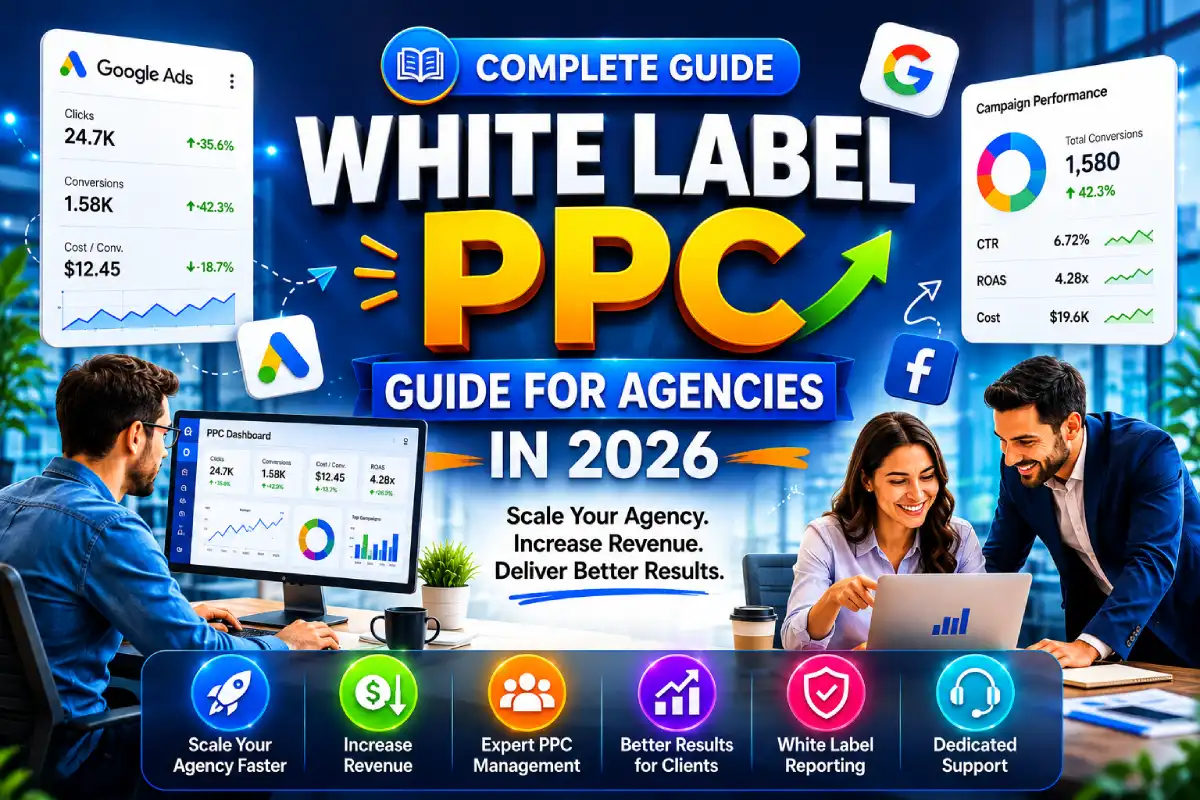
Introduction
Digital advertising is not slowing down. Businesses keep pouring money into paid search and social ads because the feedback loop is fast and the intent signals are strong. A well-run Google Ads campaign can put a brand in front of someone who is ready to buy right now, and that kind of immediacy is hard to replicate with any other channel.
But here is the problem most agencies run into. Managing PPC well is genuinely hard. The platforms keep changing, the learning curves are steep, and building an internal team of certified specialists is expensive and slow. That tension between client demand and internal capacity is exactly why white-label PPC has become such a popular growth strategy for agencies in 2026. If you want to compare how this fits into a broader paid media offering, our PPC services page is a useful reference.
So What Exactly Is White Label PPC?
At its core, white label PPC is a simple arrangement. A specialized provider runs paid advertising campaigns on behalf of your clients, and everything gets delivered under your agency's brand. Your clients see your logo on reports, your name in emails, and your portal on dashboards. The provider works quietly in the background handling the actual campaign management.
There are three people in this relationship at any given time. There is the client, who needs results. There is your agency, which owns that relationship and is responsible for strategy and communication. And there is the white label partner, who handles the technical execution day to day.
The workflow usually looks something like this. Your team gathers all the relevant information from the client, including their goals, budget, target audience, and offer. That brief gets handed to the white label provider, who builds out the campaign structure, does keyword research, writes ad copy, and sets up conversion tracking. From there, they handle ongoing optimization, which means adjusting bids, testing new ad variations, managing audiences, and producing regular reports that get sent back to you branded with your agency's identity.
Why This Model Is Picking Up Steam Right Now
The timing makes sense if you look at what is happening in the market. More businesses are investing in PPC because they want fast results alongside their longer-term SEO and content efforts. At the same time, experienced PPC specialists are genuinely hard to find and expensive to keep. A senior Google Ads manager with multi-platform skills commands a significant salary, and that is before you factor in tools, training, and management overhead.
White-label PPC sidesteps most of that. Instead of building an internal team from scratch, you plug into one that is already running. You skip the hiring risk, the ramp-up time, and the fixed cost of salaries, regardless of how many active clients you have.
There is also the multi-platform reality to consider. Clients no longer want a single channel. They want Google Search, Shopping campaigns, Facebook and Instagram, YouTube, and remarketing across all of it. Managing that mix well requires deep expertise in several different interfaces, all of which update constantly. White-label providers live inside these platforms every day, so you instantly inherit that expertise the moment you partner with them. For agencies that also want a stronger market position, pairing this with a best Google Ads agency in Accra, Ghana style positioning can help with credibility.
What You Can Actually Offer Through a White Label Partner
The service range is broader than most agencies expect. The obvious starting point is Google Ads, covering search campaigns, Performance Max, Shopping, and local campaigns for businesses that rely on foot traffic. But a solid white-label partner will also handle Meta advertising, meaning Facebook and Instagram campaigns built around awareness, retargeting, and lead generation. YouTube is increasingly part of the package too, which opens up video strategy for clients who want more than just text ads.
Beyond the campaign platforms themselves, many white-label providers also handle the infrastructure that makes campaigns work properly. Conversion tracking setup is a big one. Without clean data flowing into Google Analytics and the relevant ad platforms, you cannot optimize for anything meaningful, and your reporting is essentially guesswork. Landing page recommendations and A/B testing support are also common offerings, which matters because even a modest improvement in conversion rate can dramatically change the ROI story you tell clients.
Remarketing deserves special mention here. Following warm audiences who have already visited a client's site or engaged with their content tends to deliver a lower cost per conversion than cold traffic campaigns, and it is often an underused piece of the puzzle for agencies that are newer to paid media. This is also where Google Ads lead generation tactics become especially valuable.
The Business Case Is Hard to Argue With
Adding white-label PPC to your service offering changes the economics of your agency in a few meaningful ways.
First, it creates recurring revenue that does not require proportional growth in headcount. Every PPC client becomes a monthly management fee. Your costs with the white-label provider are relatively predictable, which means you can price your packages with healthy margins and know what you will make each month.
Second, it makes your existing clients harder to lose. When a client relies on your agency for SEO, web design, or branding, they can theoretically replace you with someone else. When you are also the person running their paid advertising and tying it directly to leads and revenue, the switching cost goes up considerably. You become embedded in their growth in a way that builds real loyalty.
Third, it is one of the cleanest upsell paths in the industry. SEO clients already believe in search visibility. Positioning PPC as a way to capture more of page one while organic rankings continue to build is an easy conversation to have. They are already paying for search; adding paid search is a natural extension. If you are building packages around this, linking to packages can make your offers easier to understand.
Who Gets the Most Out of This Arrangement
White-label PPC works across a surprisingly wide range of agency types. SEO agencies are probably the most obvious fit, since their clients already invest in search, and the jump to paid search is intuitive. Web design shops have a great opportunity here, too, since they often build sites that desperately need traffic, and PPC is one of the fastest ways to prove that the new site is actually working.
Branding agencies can use it to close the loop between positioning work and real-world performance. You spend months helping a business understand its audience and sharpen its message, and then white-label PPC lets you put that message in front of precisely targeted users and see how it converts.
Freelancers and solo consultants tend to find it especially valuable because it lets them look and act like a full-service agency without the overhead. You handle the client relationships and strategy conversations while the white-label team handles execution under your name.
Choosing the Right Partner Is Everything
The white-label model only works as well as the partner you choose, and not all providers are equal. A few things are worth digging into before you commit.
Industry experience matters more than general claims of expertise. Ask whether they have run campaigns in your clients' specific verticals. Local services, e-commerce, B2B lead generation, and healthcare all have different dynamics, and a provider who has navigated those specifics before will make your life much easier. For example, a provider that also understands Google Ads for doctors may already know how trust, compliance, and appointment intent affect results.
Reporting quality and transparency are equally important. You need reports that are easy for your clients to understand and that you can confidently walk through in a review meeting. Ask to see examples. Check whether reports can be fully branded with your agency's identity. Find out if they offer a client-facing dashboard under your domain. If the provider treats campaign details as a black box and resists deeper questions, that is a red flag worth taking seriously.
Communication setup is something agencies often underestimate until it becomes a problem. Clarify from the start how you will reach your account manager, what the expected response times are, and how escalations are handled. A provider who goes quiet for days when something urgent comes up will make you look unresponsive to your clients, even though the issue is entirely on their end.
And of course, look at actual performance history. Before and after metrics, improvements in cost per lead, ROAS gains over time. Past results are not a guarantee, but they tell you whether this team knows what they are doing.
The Honest Challenges Worth Knowing About
It would be misleading to present white-label PPC as entirely without friction. There are real challenges that agencies navigate, and knowing them upfront helps you build better systems.
Delayed reporting is probably the most common pain point. If your provider consistently sends reports late, your client meetings suffer and your agency looks disorganized, regardless of what the actual campaign numbers look like. Setting clear deadlines at the start of the relationship, not after problems arise, is the better approach.
Inconsistent performance is another reality. Campaigns fluctuate, and not every month will look like a win. What matters is whether your partner has a clear-eyed explanation of what happened and a concrete plan for improving it. Vague answers and excuses are warning signs.
And because your name is on everything, any mistakes your provider makes become your mistakes in your clients' eyes. Policy violations, tracking errors, misleading ad copy, they all reflect on your agency's reputation. Choosing a partner with proven processes and a real quality control culture reduces that risk significantly. If you need to explain performance issues to clients, the article on why your Google Ads are not converting can also help frame the conversation.
What the Next Few Years Look Like
The direction things are heading is worth paying attention to if you want to build a resilient agency. AI-powered automation is already changing how campaigns are managed. Smart bidding strategies on Google are getting more capable with each passing quarter, and providers who understand when to lean into automation and when to override it manually will consistently outperform those who treat it as a set-and-forget feature.
Video is growing across every platform. YouTube, Instagram Reels, and Facebook are all pushing video harder, and clients who invest in video creative will have more targeting options and better engagement rates than those who stick exclusively to static ads. White-label partners who can incorporate video strategy into their packages are worth seeking out.
Privacy shifts are also reshaping targeting in a significant way. Third-party cookies continue to erode as a targeting mechanism, and first-party data is becoming increasingly valuable. White-label teams that know how to integrate CRM lists, site behavior data, and customer match audiences into campaign strategy will deliver better results in a world where broad audience targeting is getting harder to rely on. If you are comparing service providers, an online advertising in Ghana guide can also help you see where PPC fits in the bigger picture.
The Bottom Line
White-label PPC is not a shortcut or a compromise. Done right, it is a strategic decision that lets you offer a high-demand, high-margin service without the operational weight of building a dedicated internal team. Your agency stays lean and focused, your clients get expert-level campaign management, and your monthly revenue grows with each new account you bring on.
The agencies that are doing this well in 2026 are not trying to be everything to everyone internally. They are making smart partnerships with specialized providers, maintaining strong client relationships, and positioning themselves as full-service growth partners even when some of the execution happens behind the scenes.
If you are ready to add white-label PPC to your agency's service offering, the best first step is a discovery call with a reputable provider. You can also contact us to discuss how this might fit your current client base, or request a free audit to see where PPC could create the most value.