
 Local SEO Strategy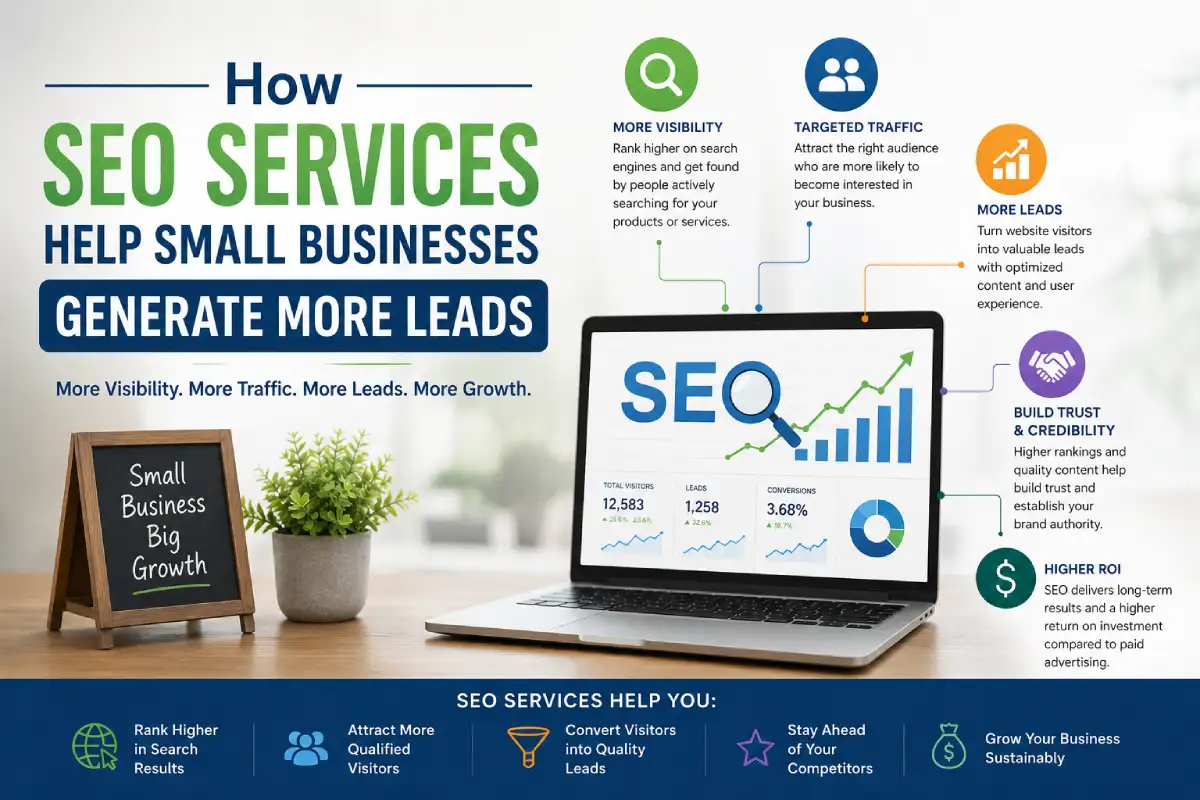
Introduction
For small businesses, lead generation is not just a marketing goal. It is the engine that keeps the business moving. Without a steady flow of inquiries, calls, form submissions, or bookings, even a business with great service and loyal customers can struggle to grow predictably.
That is why SEO services matter so much. They help small businesses get found by people who are already searching for a solution. Instead of interrupting strangers with ads or relying only on referrals, SEO puts your business in front of potential customers at the exact moment they are looking for help.
This is especially valuable for small businesses because resources are usually limited. You may not have a huge advertising budget or a full in-house marketing team. SEO offers a way to build visibility over time, attract better traffic, and create a lead generation system that can keep working long after the initial work is done. If you want a broader explanation of how search supports growth, see why your business needs SEO services.
Why Lead Generation Matters
Lead generation is the process of turning interest into opportunity. A lead is not always a sale, but it is a person who has shown enough interest to take the next step. That next step could be calling your office, requesting a quote, booking a consultation, or filling out a contact form.
For small businesses, leads matter because they create momentum. A business with a consistent flow of leads can plan ahead, forecast revenue more accurately, and spend less time worrying about where the next customer will come from. Without that flow, growth becomes unpredictable and heavily dependent on chance or word of mouth.
Lead generation also gives you more control over your sales pipeline. Instead of waiting for customers to come to you randomly, you build a system that attracts the right people on purpose. SEO is one of the most effective ways to do that because it connects your business with searchers who already have intent.
The quality of the lead matters just as much as the quantity. Ten highly relevant leads are usually more valuable than one hundred visitors who were never likely to buy. SEO helps improve this balance by bringing in people whose searches match what your business actually offers.
How SEO Attracts Qualified Visitors
One of the biggest strengths of SEO is that it attracts people with intent. Someone using search is usually trying to solve a problem, compare options, find a local provider, or learn whether a service is right for them. That makes search traffic far more valuable than casual traffic from people who are not ready to act.
This is where keyword strategy becomes important. If a small business ranks for the wrong terms, it may get plenty of visitors but very few leads. For example, a landscaping company might get clicks from people researching gardening tips, but those visitors may never become customers. On the other hand, ranking for “lawn care service near me” or “weekly lawn maintenance in Accra” is much more likely to bring in serious inquiries.
SEO services help by identifying which searches are most likely to produce results. That includes service-related keywords, problem-based keywords, comparison keywords, and location-based searches. When your pages are aligned with those searches, the traffic you receive is already much closer to buying mode.
Qualified visitors also tend to behave differently once they land on your site. They spend more time reading, click more pages, and are more likely to contact you if the page answers their question clearly. That is why SEO should never be treated as just a traffic game. The real goal is to attract the right people and guide them toward action.
Local SEO for Lead Generation
For most small businesses, local SEO is one of the most powerful lead generation tools available. If your customers are in a specific city, region, or service area, you want your business to appear when nearby people search for what you offer. Local searches often carry strong buying intent, which makes them especially valuable.
Think about how people search when they need something quickly. They do not usually type broad phrases like “best electrician.” They search for “electrician near me,” “same-day electrician in Accra,” or “licensed electrician for panel upgrade.” Those searches usually come from people who are ready to choose a provider soon. Local SEO helps your business show up in those moments.
A strong local SEO strategy usually includes optimizing your business profile, improving your map visibility, creating location-specific pages, collecting reviews, and making sure your name, address, and phone number are consistent everywhere online. These details may seem small, but they help search engines understand where you operate and which searches you should appear in.
Local SEO also builds trust. When a potential customer sees your business in local results, reads positive reviews, and finds clear contact information, they are more likely to take you seriously. That trust can be the difference between a casual browser and a real lead.
For service businesses especially, local SEO can become the main source of new business. A plumber, dentist, roofer, attorney, or HVAC company often depends on local visibility more than broad national reach. When local SEO is done well, it can create a reliable stream of inquiries from people who are ready to hire. If you are comparing support options, SEO services can help turn that local visibility into measurable growth.
Content Marketing and SEO
Content marketing plays a major role in lead generation because it helps people understand your business before they contact you. Many customers do not convert the first time they visit a site. They need answers, reassurance, and a reason to trust you. Good content can provide all three.
SEO and content marketing work best when they support each other. SEO helps people find your content, and content gives them something useful once they arrive. A blog post, service page, FAQ page, guide, or comparison article can answer a question that is already on the customer’s mind. That makes your business more helpful and more memorable.
For example, a small accounting firm could create content around topics like “when to hire a bookkeeper,” “how to prepare for tax season,” or “common mistakes small businesses make with payroll.” These are not random topics. They are practical questions that potential customers actually search for. A helpful article can build trust long before the person is ready to book a consultation.
Content also allows small businesses to show expertise without sounding overly promotional. Instead of constantly saying, “We are the best,” you demonstrate knowledge through clear explanations and practical examples. That approach usually works better because it feels more genuine and useful.
Over time, content can keep generating leads long after it is published. A well-written page can continue ranking for months or even years, bringing in traffic and inquiries without constant reinvestment. That is one reason SEO-driven content is so valuable for small businesses with limited budgets.
Conversion Optimization Techniques
Attracting visitors is only part of the equation. If your website does not make it easy for people to contact you, ask questions, or take the next step, then traffic will not turn into leads. That is where conversion optimization becomes essential.
The first part of conversion optimization is clarity. Visitors should immediately understand what your business does, who it serves, and what action they should take next. If the message is confusing or buried under too much information, people will leave before they ever convert.
Calls to action matter a lot. A visitor should not have to hunt for your contact form, quote request button, or phone number. These actions should be visible, simple, and repeated in the right places throughout the site. A strong CTA can make a big difference in how many leads your site produces.
Trust signals also improve conversion rates. Testimonials, reviews, certifications, portfolio samples, case studies, and guarantees can reduce hesitation. People are more likely to contact a business when they feel confident it is legitimate and capable. Even small touches, like a real team photo or a clear service area, can help create that confidence.
Page speed and mobile usability also matter. If your site is slow or awkward on a phone, many visitors will leave before they ever reach your contact form. Since many small business searches happen on mobile, a clean mobile experience is not optional. It directly affects lead generation.
Another useful technique is matching the page to the user’s intent. A visitor who searches for “roof repair estimate” should land on a page focused on roof repair, not a generic homepage. The more closely the page matches the search, the easier it becomes to convert the visitor.
Measuring Lead Generation Success
If you want SEO to generate leads, you need to measure the right things. Rankings are useful, but they do not tell the full story. A keyword can rank well and still produce very few leads if the traffic is not relevant or the page does not convert.
Start by tracking the actions that matter most to your business. These may include phone calls, form submissions, appointment requests, quote requests, email inquiries, or online bookings. Those are the real indicators of whether SEO is working as a lead generation tool.
It also helps to look at which pages are producing those leads. Some pages may bring in a lot of visitors but only a few conversions. Others may get less traffic but deliver stronger results. That difference can reveal a lot about which topics, pages, and keywords are actually worth investing in.
Organic traffic trends are useful too, especially when paired with conversion data. If traffic is growing but leads are flat, the issue may be content relevance or website design. If rankings are improving but leads are not, your pages may need stronger calls to action or better alignment with user intent. Measuring both sides helps you make smarter decisions.
Small businesses should also pay attention to lead quality, not just volume. A flood of poor-fit inquiries can waste time and drain resources. Good SEO should attract people who are realistically able and ready to buy, not just anyone who happens to click.
Common SEO Mistakes Small Businesses Make
One of the most common mistakes is targeting keywords that are too broad. It can be tempting to chase high-volume search terms, but those terms are often hard to rank for and may not attract the right audience. Specific, high-intent keywords usually perform better for small businesses.
Another mistake is ignoring local search. Many small businesses depend on nearby customers, yet they fail to optimize for location-based searches or manage their business listings properly. That means they miss out on some of the best lead opportunities available to them.
Some businesses also create content without a real strategy. They publish blog posts that sound informative but do not connect to customer needs or business goals. Content like that may look active, but it often fails to generate leads because it is not built around search intent.
Weak conversion design is another issue. A site may rank well and still not produce leads because the page does not clearly tell visitors what to do next. If the contact options are hidden, the value is unclear, or the site feels untrustworthy, potential customers may leave without taking action.
Finally, many small businesses treat SEO as a one-time project. They optimize a few pages, publish a few articles, and then stop. SEO works best as an ongoing process. Search trends change, competitors improve, and content becomes outdated. Without regular attention, lead generation results usually weaken over time.
If you are unsure whether your site has reached that stage, it may help to review 10 clear signs you need professional SEO services.
Conclusion
SEO services can help small businesses generate more leads by connecting them with the right audience at the right time. Instead of relying only on ads, referrals, or luck, SEO builds a system that attracts people who are already searching for a solution.
The real strength of SEO is not just visibility. It is the ability to bring in qualified visitors, support trust-building through useful content, improve local discovery, and guide people toward action. When those pieces work together, your website becomes a consistent source of opportunities.
For small businesses that want steady growth, SEO is one of the smartest investments available. It takes time, but the long-term payoff can be significant. A well-planned SEO strategy does more than increase traffic. It helps turn search interest into real leads, and real leads into real business.